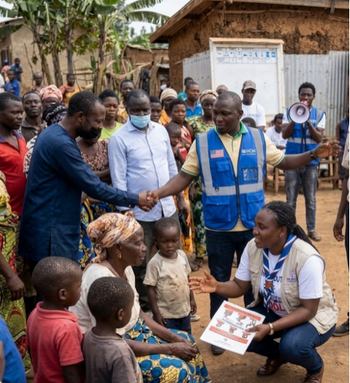
In late October, a nurse was killed and a second health care worker seriously injured while responding to an Ebola alert.7,16 As of November 13, insecurity and threats against response teams persisted in 3 of the province's health zones,14 and a local checkpoint remained closed due to insecurity.4
Other Provinces
The national situation reports for November 11 to 16 describe no attacks or security incidents in Haut-Uélé, South Kivu, Bas-Uélé, South Ubangi, or North Ubangi.4,6,11,13-15 However, an analyst at the conflict monitor Armed Conflict Location & Event Data reports that ADF attacks in southern Haut-Uélé have become more frequent in 2026.10
Contacts Out of Reach: What Insecurity Costs the Response
Contact tracing shows the strain most clearly. On November 16, teams reached 81.6% of the contacts they were following, short of the 95% target. Tshopo had the lowest rate at 75.3%, followed by North Kivu at 77.9%.4 The November 5 attack in North Kivu alone left more than 1000 contacts lost to follow-up.2,7
What the follow-up rate does not show is just as important. The number of contacts being followed swings sharply from day to day. In Ituri, the list fell from 14,368 on November 12 to 5298 on November 14, then jumped back to 16,222 the next day.6,11,15 The situation reports do not explain these swings, which makes any single day's rate an unreliable measure of how many contacts are actually being reached.
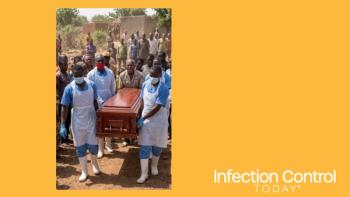
Late detection is another concern. WHO says two-thirds of confirmed deaths occur in the community, a sign that infections are still being identified too late. At the same time, almost 90% of registered deaths now receive a safe and dignified burial, according to WHO.2
Some care is also happening outside Ebola-designated treatment centers. In North Kivu, between 153 and 227 patients a day, most of them suspected cases, were being treated in regular health facilities.4,6,11,13-15 In North Ubangi, a laboratory that had been out of service began testing on November 15, although 51 samples were still pending or awaiting resampling.6,15 The current situation indicates that what is known about transmission chains remains limited, partly because of insecurity.5
Beyond the Gunfire: Burials, Rumors, and Unpaid Wages
Not all the disruption comes from armed groups. Some of the most persistent and pressing problems stem from communities themselves and from unpaid staff. Safe burials have been especially hard to sustain. On November 12 alone, Tshopo recorded 9 burials that failed because families or communities resisted.11 Bas-Uélé completed none on November 12 or 13, and by the second day it reported a complete gap in burial teams.11,14 Haut-Uélé and South Ubangi reported failed burials as well.6,11,14
Rumors are also a consistent challenge. Some travelers refused screening after hearing that staff wanted money or that the hand-washing water contained the virus. In Tshopo, rumors claimed that treatment center medicines carried the virus and that vaccination was a business.13
Despite these barriers, there are signs of progress. The governor of Tshopo brought partners and community leaders together to address the resistance, and 3 of the 4 incidents reported that day were resolved.14 In North Kivu, the response reached a compromise with community leaders and local groups who had opposed building a treatment center.11
Pay is the other pain point. Staff at one treatment center remained on strike over unpaid wages.11,13,14 Workers at 3 Ituri checkpoints went on strike over unpaid bonuses, and 4 checkpoints in Bas-Uélé were shut down by a staff strike.11 WHO says delays in paying front-line workers create tension and slow the response.2,7
The Cost of Every Interruption
After the November 5 attack in North Kivu, a local hospital director warned that patients who fled could become a source of transmission.17 What is at stake is outbreak containment. When care, contact tracing, or surveillance is disrupted, communities that are already stretched thin face greater risk. Patients need a safe path to treatment, and health care workers need to be able to do their jobs without the threat of violence.12
In infection prevention, “lost to follow-up” is a phrase we know well. It appears online lists and in outbreak summaries, usually beside a handful of names that slipped away after an exposure. In eastern DRC, the list of people at risk of slipping away is far longer: every day from November 12 to 16, more than 4000 contacts under follow-up went unseen.4,6,11,14,15
These numbers become more disheartening when nearly half of everyone confirmed with Ebola has died, and more than half in North Kivu.4 Most deaths happen in the community, where infections are still being found too late.2 This is the human cost of the gap between the response being built and the reality on the ground. Attacks, unpaid wages, and rumors all wear away at the same thing: the ability to earn community buy-in and save lives.
The community is key to winning this outbreak, and local people’s trust still needs to be earned. The communities themselves need the knowledge, tools, and resources to stop Ebola, and they need to be informed and able to advocate for themselves. Right now, more than 17,000 community health workers and 46,000 community members are trained and invested in supporting this work.2 In eastern DRC, the names on the contact list are men, women, and children whose lives matter. Local and international front-line providers need safety and timely pay to be successful in reaching them.
References
1. Johnson D. DR Congo Ebola outbreak: unrest fuelled by armed groups holds back response. UN News. Published November 13, 2026. Accessed November 14, 2026. https://news.un.org/en/story/2026/11/1168797
2. Six months on, accessing hard-to-reach communities key to halting Ebola outbreak. World Health Organization Regional Office for Africa. November 15, 2026. Accessed November 16, 2026. https://www.afro.who.int/countries/democratic-republic-of-congo/news/six-months-accessing-hard-reach-communities-key-halting-ebola-outbreak
3. Africa CDC says Ebola outbreak in DR Congo ‘still not under control.’ Al Jazeera. Al Jazeera Staff. November 15, 2026. Accessed November 16, 2026. https://www.aljazeera.com/news/2026/11/15/africa-cdc-says-ebola-outbreak-in-dr-congo-still-not-under-control
4. Rapport de situation de la 17e épidémie de la maladie à virus Ebola/RDC: SitRep N°186/MVE-BDBV/16/11/2026 [Situation report on the 17th Ebola virus disease epidemic, DRC: SitRep No. 186]. Institut National de Santé Publique. November 17, 2026. Accessed November 18, 2026. https://insp.cd/sitrep-n186-mve-bdbv-16-11-2026/
5. Ebola disease outbreak caused by Bundibugyo virus – multi-country – 2026. European Centre for Disease Prevention and Control. November 13, 2026. Accessed November 14, 2026. https://www.ecdc.europa.eu/en/public-health-events/2026-eip-00026/2026-11-13
6. Rapport de situation de la 17e épidémie de la maladie à virus Ebola/RDC: SitRep N°184/MVE-BDBV/14/11/2026 [Situation report on the 17th Ebola virus disease epidemic, DRC: SitRep No. 184]. Institut National de Santé Publique. November 15, 2026. Accessed November 16, 2026. https://insp.cd/sitrep-n184-mve-bdbv-14-11-2026/
7. WHO Director-General’s opening remarks at the Member State briefing on Ebola outbreak in the Democratic Republic of the Congo – 11 November 2026. World Health Organization. November 11, 2026. Accessed November 14, 2026. https://www.who.int/news-room/speeches/item/who-director-general-s-opening-remarks-at-the-member-state-briefing-on-ebola-outbreak-in-the-democratic-republic-of-the-congo---11-november-2026
8. Council Implementing Decision (CFSP) 2020/1509 of 16 October 2020 implementing Decision 2010/788/CFSP concerning restrictive measures against the Democratic Republic of the Congo. Official Journal of the European Union. 2020;L345:8-12. Accessed November 16, 2026. https://eur-lex.europa.eu/eli/dec_impl/2020/1509/oj
9. ISIS-Democratic Republic of Congo (ISIS-DRC). Counterterrorism Guide. National Counterterrorism Center. Updated February 2022. Accessed November 16, 2026. https://archive.dni.gov/nctc/terrorist_groups/isis_drc.html
10. Serwat L. Is the ADF expansion threatening Ebola containment in the DRC? Armed Conflict Location & Event Data. Published July 3, 2026. Accessed November 16, 2026. https://acleddata.com/expert-comment/adf-expansion-threatening-ebola-containment-drc
11. Rapport de situation de la 17e épidémie de la maladie à virus Ebola/RDC: SitRep N°182/MVE-BDBV/12/11/2026 [Situation report on the 17th Ebola virus disease epidemic, DRC: SitRep No. 182]. Institut National de Santé Publique. November 13, 2026. Accessed November 14, 2026. https://insp.cd/sitrep-n182-mve-bdbv-12-11-2026/
12. Africa CDC statement on the attack in North Kivu, DRC. Africa Centres for Disease Control and Prevention. November 8, 2026. Accessed November 14, 2026. https://africacdc.org/news-item/africa-cdc-statement-on-the-attack-in-north-kivu-drc
13. Rapport de situation de la 17e épidémie de la maladie à virus Ebola/RDC: SitRep N°181/MVE-BDBV/11/11/2026 [Situation report on the 17th Ebola virus disease epidemic, DRC: SitRep No. 181]. Institut National de Santé Publique. November 12, 2026. Accessed November 14, 2026. https://insp.cd/sitrep-n181-mve-bdbv-11-11-2026/
14. Rapport de situation de la 17e épidémie de la maladie à virus Ebola/RDC: SitRep N°183/MVE-BDBV/13/11/2026 [Situation report on the 17th Ebola virus disease epidemic, DRC: SitRep No. 183]. Institut National de Santé Publique. November 14, 2026. Accessed November 16, 2026. https://insp.cd/sitrep-n183-mve-bdbv-13-11-2026/
15. Rapport de situation de la 17e épidémie de la maladie à virus Ebola/RDC: SitRep N°185/MVE-BDBV/15/11/2026 [Situation report on the 17th Ebola virus disease epidemic, DRC: SitRep No. 185]. Institut National de Santé Publique. November 16, 2026. Accessed November 18, 2026. https://insp.cd/sitrep-n185-mve-bdbv-15-11-2026/
16. Attackers kill nurse, injure health worker responding to DRC Ebola case. Al Jazeera. Al Jazeera Staff. October 26, 2026. Accessed November 18, 2026. https://www.aljazeera.com/news/2026/10/26/attackers-kill-nurse-injure-health-worker-responding-to-drc-ebola-case
17. Armed men kill at least 33 in village in Ebola-hit eastern DRC. Al Jazeera. Al Jazeera Staff. November 6, 2026. Accessed November 14, 2026. https://www.aljazeera.com/news/2026/11/6/armed-men-kill-at-least-33-in-village-in-ebola-hit-eastern-drc