
News
Advertisement
Advertisement
Advertisement


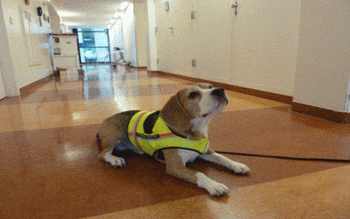
A new study published in BMJ conducted by investigators at two large hospitals in The Netherlands shows that a trained dog was able to detect Clostridium difficile with high estimated sensitivity and specificity, both in stool samples and in hospital patients infected with C. difficile.


The plague-causing bacteria Yersinia pestis evades detection and establishes a stronghold without setting off the body's early alarms. New discoveries reported this week help explain how the stealthy agent of Black Death avoids tripping a self-destruct mechanism inside germ-destroying cells.
Advertisement
Advertisement
Trending on Infection Control Today
1
Bug of the Month: The Quiet Guest in the Dust
2
What Is Effective Preparedness for Emerging Respiratory Viruses? Shazia Irum, MSC, MBA, RN, CIC, CPHQ, FAPIC, answers
3
Continuous Photohydrolysis Disinfection Cuts MDROs, COVID-19, and Hospital Transfers in Long-Term Care, Study Finds
4
Influenza D and Canine Coronavirus: Why Underrecognized Animal Viruses May Be the Next Respiratory Threat
5