|Articles|January 31, 2012

Cardinal Health Introduces Smart-Seal Surgical Mask

Cardinal Health announces the availability of its Smart-Seal surgical mask, designed to enhance fit and help reduce fog on eyewear. The mask is the companys latest addition to its facial protection portfolio and leverages the key design features of the companys Secure-Gard® mask while adding enhanced features of fit and fog protection.

The Smart-Seal surgical mask features a patent-pending, "cinch and hug" single-tie design that creates a custom seal around the wearers nose and mouth. The innovative design eliminates gaps between the wearers face and the mask, promoting proper use and helping to reduce contamination risks in the perioperative environment.

The Smart-Seal surgical mask features closed-cell foam and a fog-reducing vapor barrier. It also has a large chamber with two rows of sonic bonds that help keep the mask filter away from the wearers face and minimize distractions.

The Smart-Seal surgical mask provides the highest level of fluid-resistant protection at 160mmHg. In addition, the Smart-Seal surgical mask meets the highest level of bacteria filtration efficiency (BFE) and particulate filtration efficiency (PFE), with BFE equaling 99.9 percent and PFE equaling 99 percent.

"We developed the Smart-Seal surgical mask in direct response to customer indications that fogging was a problem," says Lisa Ashby, president of category management at Cardinal Health. "The Smart-Seal mask offers the next evolution in surgical mask protection, addressing not only fog and fit, but also providing the highest level of filtration and fluid resistance."


Related to this article

A brightly lit Hospital operating room, a surgical team wearing gowns and masks.  (Adobe Stock 1790696595 by Damian)
Turnover pressure can leave critical OR cleaning steps unfinished. Karen deKay, MSN, RN, EBP-C, CNOR, CIC, FAPIC, examines common gaps in environmental hygiene and how shared responsibilities, attention to disinfectant contact time, and ongoing education can help teams strengthen practices between cases.
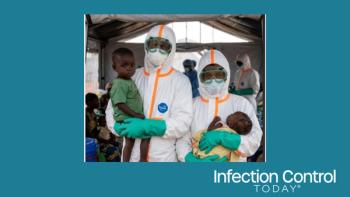
Infection preventionists in full PPE with children in DRC.  (Image credit: author with AI)
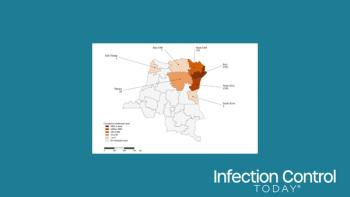
Nearly 4 months into the DRC's Bundibugyo virus disease outbreak, some indicators suggest transmission may be slowing. But shifting hotspots, treatment-center capacity problems, community deaths, and incomplete surveillance data show why national case totals alone cannot determine whether containment has been achieved.
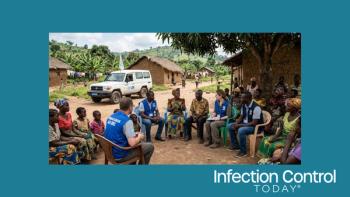
Health care workers from the US speaking with other health care workers in DRC.  (Image credit: author with AI)
Is the Ebola outbreak in the DRC getting better? The answer depends on which numbers you examine. Several important indicators are moving in the right direction, including slower case growth and a declining Rₜ. But major gaps remain in contact tracing, testing, community deaths, safe burial coverage, and treatment capacity in some of the hardest-hit areas. ICT takes a deeper look at the latest outbreak data and why the numbers suggest cautious optimism, not victory.