
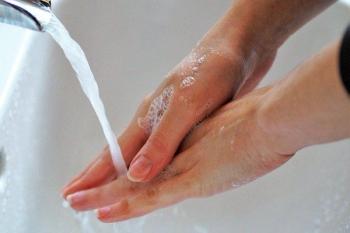
The investigators say that their findings underscore the importance of encouraging and “empowering” patients to be a part of efforts to improve hand hygiene compliance among healthcare workers.
The investigators say that their findings underscore the importance of encouraging and “empowering” patients to be a part of efforts to improve hand hygiene compliance among healthcare workers.
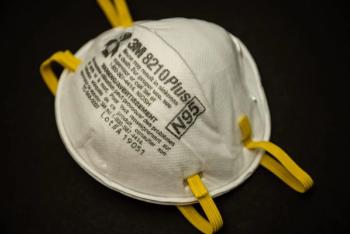
Ashish Diwanji: “The personal protective equipment made and sold in the US has to abide by the standards set up by NIOSH …. The PPE made and sold from China do adhere to the Chinese standards, but their standards are different than ours.”
“[T]here is a need for early education to enforce correct PPE use to alleviate personal risk concerns. This includes re-education of the donning and doffing of PPE to confirm staff are effectively protecting themselves. Data suggests substantial self-contamination risk occurs when doffing PPE….”
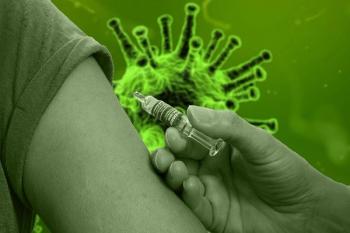
Kevin Kavanagh, MD: “Infection preventionists will need to make sure that they still have access to adequate PPE, even if the vaccine comes out [and they] really need to look at the experimental group that was used for the EUA.”
Michael Bell, MD: “The challenge that infection control professionals face has grown tremendously. We’re asking these individuals to not only be experts, but also to take responsibility for such a wide range of activities ... and finding ways to help them accomplish what they’re doing across the whole population of healthcare personnel is the rationale behind Project Firstline.”
CDC’s Jay Butler, MD: “It is critical that every healthcare worker in the United States has the training, information, and resources they need to protect themselves, their patients, colleagues, families, and communities from infections, and Project Firstline is designed to meet that need.”
Discussions about hospitalizations should include those of healthcare personnel who have been hospitalized with COVID-19. This is something that has been a gap in our data but increasingly discussed.
Sharon Ward-Fore, MS, MT(ASCP), CIC: “I’m hoping that healthcare facilities will find the value in their infection preventionists and understand how important a role they play as far as training on PPE and disinfectants, and in hand hygiene, being kind of a boots on the ground people on the floor to see things firsthand.”

Franklin Dexter, MD: “I would recommend to those people working in different surgical suites to recognize that within an operating room, you shouldn’t assume that stepping away from the patient would put you in reduce risk. You should think about what the airflow is in the operating room.”

Fauci: “While results of phase 3 trials for multiple candidate vaccines are on the near horizon, ‘low-tech’ tools to prevent the spread of SARS-CoV-2 are essential, and it must be emphasized that these interventions will still be needed after a vaccine is initially available.”

Maya Gossman, RN: “Our infection preventionist has trained me in the past with the PPE use and the infection prevention measures. And so, I’m passing that on—the knowledge that she’s given me—I’m passing that on at this point to my vascular nurse trainees, my orientees.”
Researchers from China recommend disinfecting the air, alongside, sanitizing surfaces, to reduce exposures and transmission.

By their nature, challenge trials have to be performed in young healthy individuals. SARS-CoV-2 is most lethal in the elderly and those with co-morbidities. Thus, an effective vaccine may be found for the young, but not in the elderly with an aging immune system.

Monica Gandhi MD, MPH: “We will get to the end of this [COVID-19]. We will get to a combination of vaccine and natural infection, enough people getting herd immunity that this will stop. This will stop and we will get back to normal.”
The education of IPs has become a topic of interest since the onset of coronavirus disease 2019 (COVID-19). The novel coronavirus highlighted that there perhaps are not enough IPs, and that’s especially true since their knowledge is being sought by schools, businesses and other non-healthcare settings.
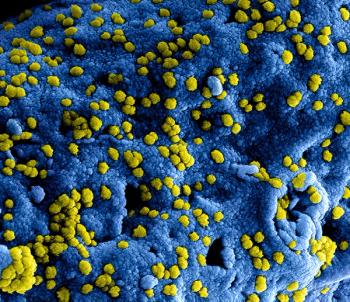
Too many hospitals apparently do not use the CDC’s Hospital Toolkit for Adult Sepsis Surveillance, which may explain the number of healthcare-acquired infections that remain unreported.
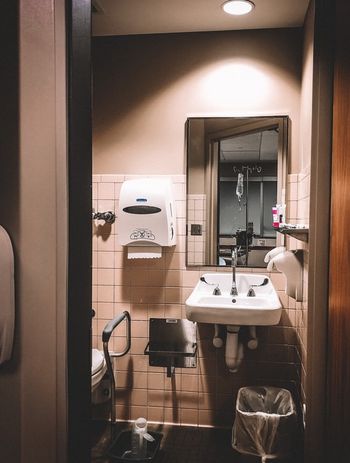
When healthcare workers using the red box stepped into the patients’ rooms, there was “significantly increased non-compliance” with PPE and hand hygiene protocols compared to those healthcare workers who went into rooms without red boxes.

Investigators say that a corrections officer in a Vermont prison had had “multiple brief encounters” with whom the study defines as 6 incarcerated or detained persons (IDPs) who had COVID-19 but did not know it yet.

Investigators found that the mean healthcare cost for treating elderly influenza patients per patient per flu season ranged from $3,299 to $12,398 higher than the costs for treating patients with congestive heart failure, chronic obstructive pulmonary disease, coronary artery disease, and stage 5 renal disease.

Investigators found that a prompt on a disinfection tracking system led to an increase rate of the disinfection of computers on wheels at a veterans’ hospital in Texas.
It’s no longer just a matter of case counts and hospitalizations due to COVID-19, but it’s what we’re seeing in terms of the demographic groups being affected and associative complications.
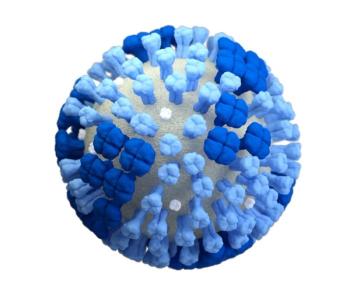
Study: “There was no difference in the outcome in COVID-19 patients co-infected with influenza compared to non co-infected patients, however, a larger sample of cases will be needed for further assessment of these outcomes.”
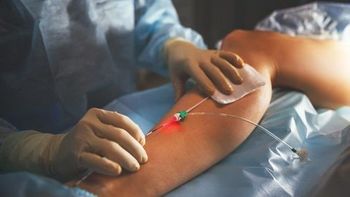
CAUTI rates were 83% higher and CLABSI rates were 65% higher in the COVID-19 units compared to the non-COVID-19 units.

There are 4 “moments” involved as a healthcare professional at a long-term care facility (LTCF) weighs whether to prescribe an antibiotic to a patient or resident.

A letter signed by 80 researchers says the concept put forth by the Great Barrington Declaration is “a dangerous fallacy.”
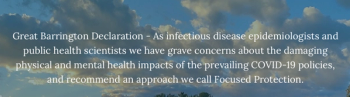
Great Barrington Declaration: “Schools and universities should be open for in-person teaching. Extracurricular activities, such as sports, should be resumed. Young low-risk adults should work normally, rather than from home. Restaurants and other businesses should open.”
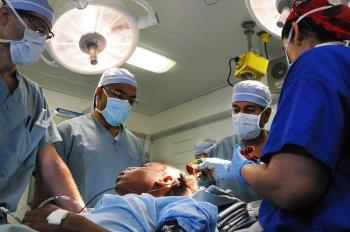
Investigators note that during the coronavirus disease 2019 (COVID-19) pandemic, there have been discussions about the role of social distancing in ORs during tracheal intubation and/or extubation, and other aerosol generating procedures.

It can be helpful for infection preventionists to still provide quick COVID-19 rounds in units and high-risk areas like emergency departments and urgent care clinics. These can be as simple as 30-minute reviews of personal protective equipment, isolation precautions, and communication pathways.
Mary Jean Ricci MSN, RNBC: “In most facilities, the infection preventionist is the person doing contact tracing, is assisting the students should there be an exposure, is assisting with providing education on site or real-time education with the students should they see the students take off their PPE.”
For infection preventionists and frontline healthcare workers, the Great Barrington Declaration places their lives and livelihood at risk. A field hospital has been activated in Wisconsin and the state is at risk of running out of hospital beds and trained staff.